
koza mostra
(gr)
Greece in 2012 was a country in a state of shock. The sovereign debt crisis had turned austerity into state policy: pensions slashed, hospitals closed, an entire generation without work and without prospects. In the streets of Athens, protests followed one after another. In Thessaloniki, the second city, life went on with that peculiar blend of despair and Mediterranean resilience that the Greeks have known for centuries. It is against this backdrop that Ilias Kozas, a veteran guitarist with bands such as Cabaret Balkan and the Motherfunkers, decides that the time has come to find his own voice. And that this voice, rather than lamenting the crisis, will dance right over it.
Thessaloniki is not Athens, and Koza Mostra has never hidden that peripheral pride. The port city on the Thermaic Gulf is a melting pot of Balkan, Ottoman, Jewish and Greek influences, where music has always been more hybrid and more working-class than the capital allowed. It was there that the band was formed in 2012, with a name that is already a statement of character: koza mostra means, in colloquial Greek, ‘what a spectacle’. An exclamation of admiration in the face of something excessive, extraordinary, impossible to ignore. The name, they said, came about because that was exactly what they wanted to be.
Less than a year after forming, Koza Mostra were selected to represent Greece at the 2013 Eurovision Song Contest in Malmö, alongside the legendary Agathonas Iakovidis. A rebetiko singer since 1973, he has never agreed to sing any other style. The Greek genre of the interwar period, born in the poor neighbourhoods of the ports, music of marginality and emotional resistance, a close relative of the blues and fado. Together they took a song called ‘Alcohol is Free’ to the biggest stage in European popular music. A blend of ska punk and rebetiko, with lyrics about shipwrecks and wind-swept alleyways, a transparent metaphor for the Greek condition. They finished in sixth place.
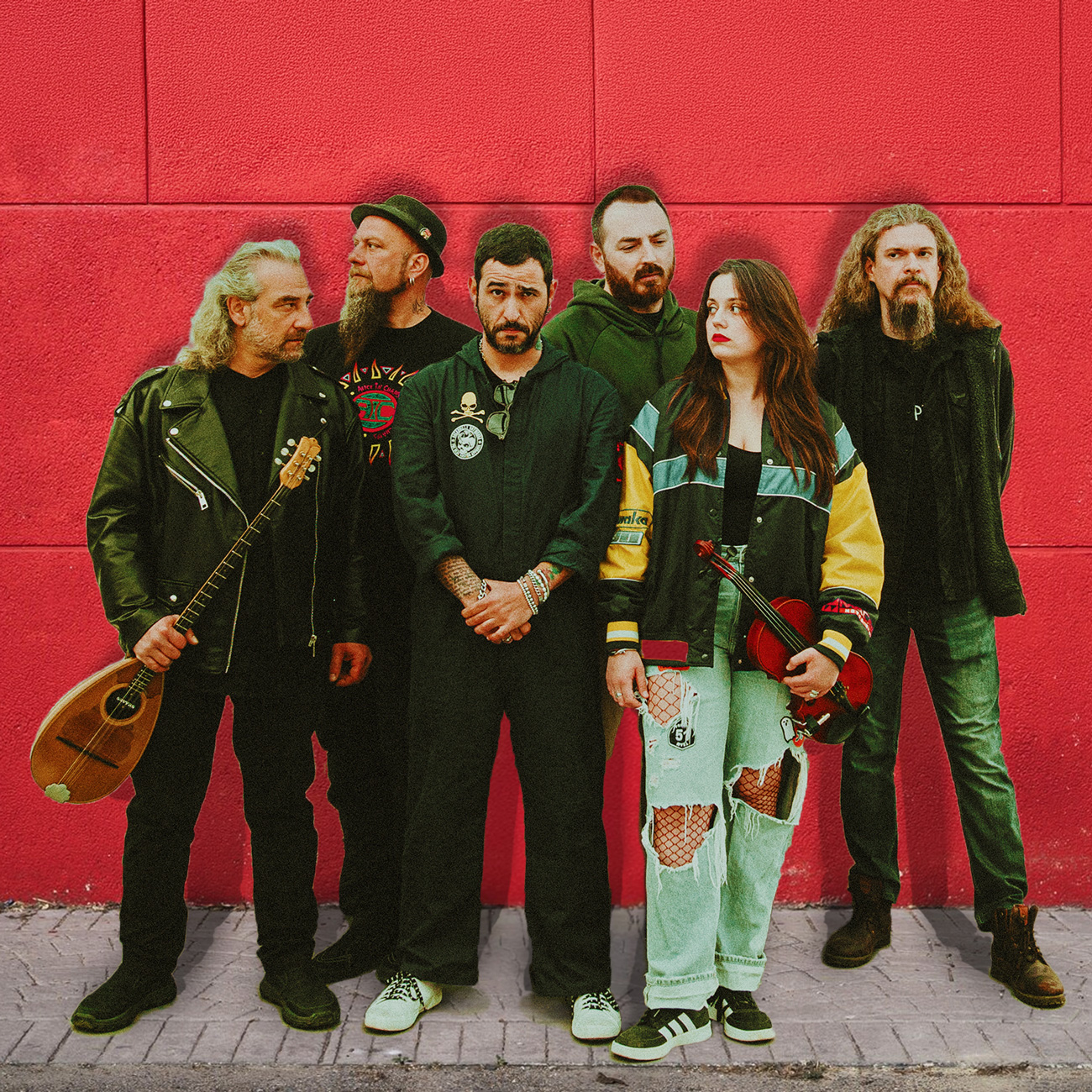
For almost fifteen years, Koza Mostra has been creating music that happens when rebetiko meets ska, punk, hard rock and Macedonian and Balkan rhythms. The bouzouki and saxophone blend seamlessly with the electric guitar and drums, as if it had always been this way. On stage, the band members sometimes wear the fustanella (the traditional white Greek men’s kilt) in an ironic and proud appropriation that says: we are excessive, we are old-fashioned, we are modern, we are everything at once. ‘I wanted to create an imaginary bridge linking Greece to the rest of Europe,’ said Ilias Kozas. ‘In Spain they have flamenco, in Ireland they have the jig, we have rebetiko. It’s the same thing.’
In 2024, Koza Mostra released their third album, Malaka, a Greek word difficult to translate directly, something between ‘idiot’, ‘fool’ and ‘dear friend’, depending on the tone and context. The title is a calculated provocation: in a world that takes itself too seriously, calling yourself malaka is an act of freedom. The album includes the single ‘Elvis’, which blends heavy metal with bouzouki, and features collaborations with Pedro Erazo of Gogol Bordello.
Med will savour the Mediterranean ethno-punk that transforms a stage into a global tavern.