
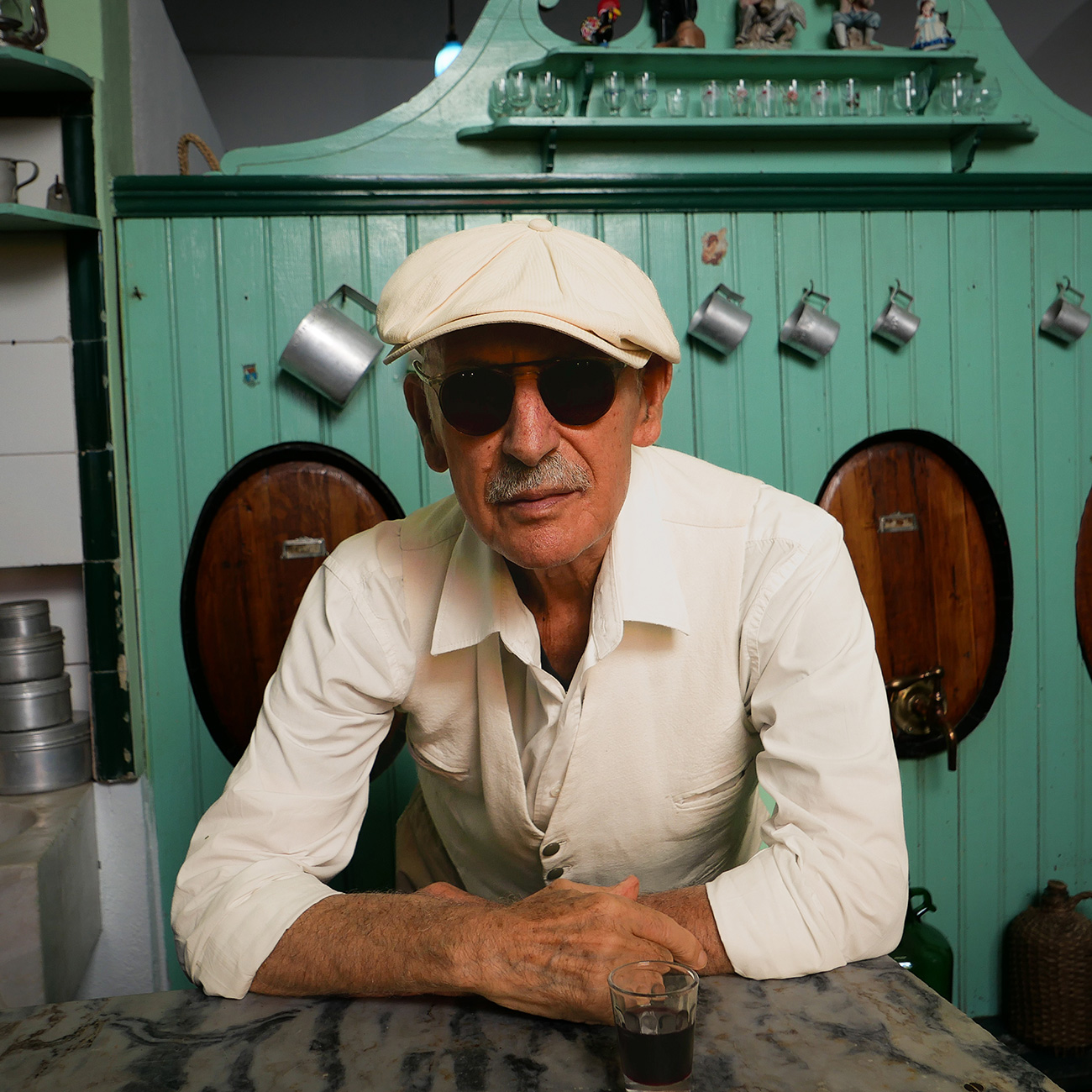
VITORINO
(PT)
The year 2025 marks fifty years since the release of Semear Salsa ao Reguinho, the debut album by Vitorino Salomé, who has become one of the most iconic voices in contemporary Portuguese music.
A singer, songwriter and performer, Vitorino is today recognised as one of the last surviving figures of the April Revolution still actively involved in the artsa living witness to half a century of music, freedom and democracy.
Born in Redondo into a family of musicians, he grew up immersed in the oral traditions of the Alentejo. From an early age, he crossed paths with the leading figures of protest music, having been a faithful companion to José Afonso and Adriano Correia de Oliveira, from whom he learnt the art of the stage and respect for the audience.
Alongside José Mário Branco, Sérgio Godinho and other colleagues, he made a living singing in the metro and shared the experience of emigration in Paris, amidst literary gatherings, bohemian life and political struggle.
His career has been marked by major collaborations: Fausto, Rui Veloso, Jorge Palma, Tim, Janita Salomé, amongst many others. He was the founder of the Rio Grande project and recorded in Cuba with the Septeto Habanero, constantly opening himself up to international musical dialogue.
Vitorino’s career has been distinguished by awards that underscore his cultural significance:
- Prémio José Afonso, for the album Eu Que Me Comovo por Tudo e Por Nada, written entirely in collaboration with António Lobo Antunes.
- Play Awards for Best Traditional Live Artist – 2025, testifying to the unrivalled power of his performances.
- Play Awards for Best Music Video 2025 for his song “Laurinda” (Laurinda, Karetus, Vitorino, Iolanda), directed by *Aidan Kless, which reaffirms him as an intergenerational artist, both deeply rooted in tradition and thoroughly contemporary.
- Notable appearances at WOMEX — in Thessaloniki (2013), in Santiago de Compostela, where he gave a talk on ‘A Canção como uma arma de combate às injustiças’ and at the 2021 edition in Porto, where he opened the official programme with a performance.
The new album
Scheduled for release in October 2025, the album “50 Anos a Semear Salsa ao Reguinho” recreates the original 1975 tracklist, given a fresh twist with contemporary arrangements and featuring collaborations with some of the biggest names in Portuguese music: Rui Veloso, Jorge Palma, Luísa Sobral, Cuca Roseta, Ana Bacalhau, TIM, Janita Salomé, Maria Ana Bobone, Buba Espinho, Pedro Sáfara, Segue-me à Capela, amongst others — bridging the gap between generations.
A vibrant and diverse show
The commemorative concert revisits Vitorino’s classics, blending Alentejo tradition, folk poetry and new sounds.
On stage, in addition to his band, the show features special guests (who contributed to the album) and the involvement of local artists in each region, reinforcing the community-based and deeply rooted nature of a body of work that has always drawn its inspiration from its closeness to the people and the land.