


Lalalar
(TR)
Istanbul is a city that never sleeps. Over the centuries, it has been the capital of empires, a crossroads between East and West, a living repository of civilisations layered upon one another like geological stratification. But today’s Istanbul is also something else: a metropolis of twenty million people living under mounting political pressure, where young people breathe art as if it were a matter of survival. It is from this melting pot that Lalalar emerges. Not as an export product, but as an urgent cry from within.
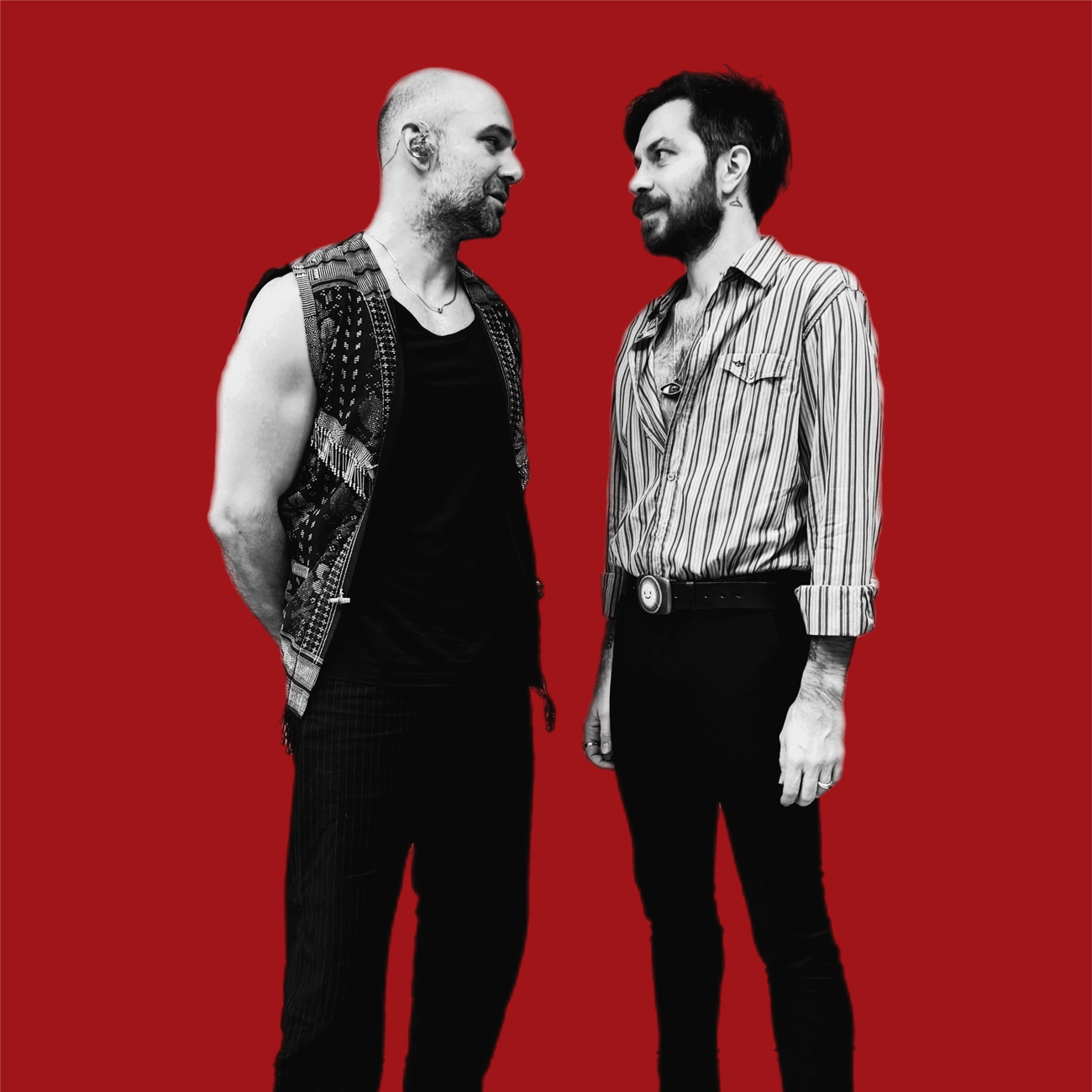
The name is in itself a declaration of intent: lala was, in the days of the Ottoman Empire, the tutor of princes. The wisest man at court. But in modern Turkish, the word has also taken on the opposite meaning: the clown, the fool, the one who takes nothing seriously. Lalalar lives precisely in this tension between the sage and the jester, between the archive and subversion. Formed in 2019 by Ali Güçlü Şimşek, Barlas Tan Özemek and Alican İpek, three veteran musicians from the Istanbul scene, the band arrived late to the party, but arrived with a bang: with the maturity of those who already know what they mean and the impatience of those who have no time to waste.
In 2022, their debut album Bi Cinnete Bakar (‘On the Brink of Madness’) propels them onto the European radar with a force no one expected. The Swiss label Les Disques Bongo Joe, the same one that hosts such diverse voices as Meridian Brothers or Orchestre Tout Puissant Marcel Duchamp, immediately recognises what it has on its hands: something that doesn’t fit on any shelf. In 2023, En Kötü İyi Olur (‘In the Worst Case, It’ll Turn Out Fine’) fulfils the promise and expands the vocabulary: lyrics about politics, rebellion, narcissistic personalities, love triangles and the eternal struggle against the hypocrisy of power.
Lalalar don’t practise fusion in the touristy sense of the word. What they do is stranger and more honest: they delve into Anatolia’s legacy—the saz, ancient polyrhythms, the legacy of 1970s Turkish psychedelia. They run it through the high-voltage current of punk, industrial electronica, funk and 1980s new wave. The result is bewildering and irresistible: cinematic, hypnotic, fat basslines; dirty, electric beats; guitars that coil like snakes, sounding at times like surf music, at others like Anatolian rock; samples that give a nod to both old Turkish cinema and video game culture.
The vocals are at times declamatory, almost rap-like, at others hypnotic and repetitive, creating slogans and images that stick in the memory. The songs are constructed like collages, full of snippets, effects and abrupt cuts, yet there is always a rhythmic thread that keeps the body moving. It is music that respects the song but thinks like a DJ: always on the lookout for the next surge of energy.