


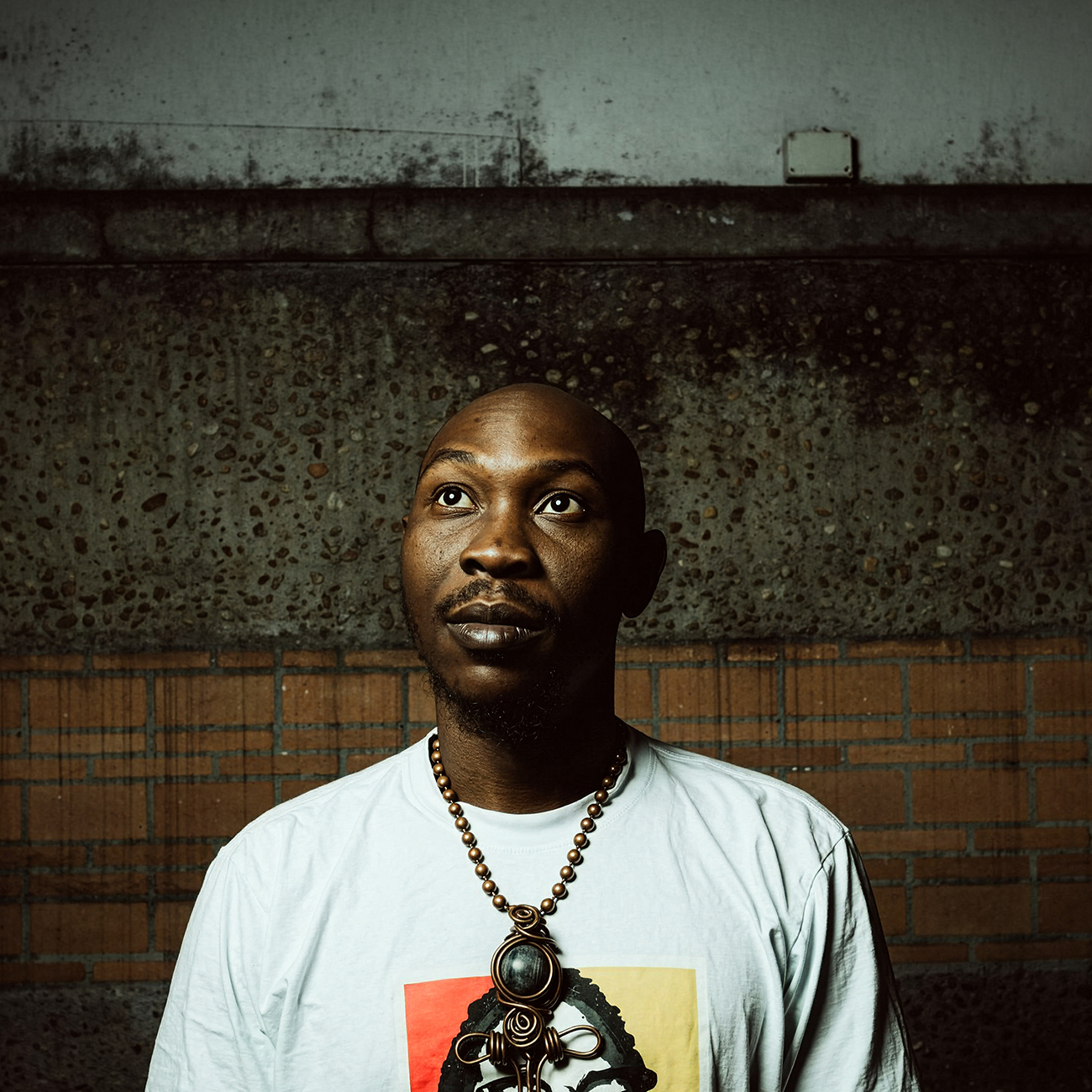
Seun Kuti & Egypt 80
(NG/FR)
Some people confuse the terms afrobeat and afrobeat, and it is important to clarify the distinction, particularly when discussing Seun Kuti. Afrobeat, created by Fela Kuti in 1970s Lagos, is a powerful and expansive genre: a blend of Yoruba rhythms, jazz, funk, soul and fearless political courage. Every track was a manifesto; every note, a spark of rebellion. Afrobeats (in the plural), on the other hand, which today dominates urban dancefloors from Lagos to London, is a more pop- and electronic-oriented movement, born of an aesthetic lineage but with less militant edge. Seun Kuti remains faithful to the former. The original afrobeat, the body and nerve of an Africa that thinks, dances and resists.
Seun Anikulapo Kuti was born in 1983 in Lagos. The youngest son of the legendary Fela Kuti and the activist and performer Fehintola Anikulapo Kuti. He literally grew up on stage and in the rehearsal rooms of the Shrine, the legendary headquarters of the Egypt 80 orchestra, where he learnt early on that music and politics could speak the same language. By the age of nine he was already accompanying his father on tours; at fourteen, following Fela’s death, he took over the leadership of the band. An almost mythical gesture of continuity.
Since then, Seun Kuti has been touring the world with a visceral energy. From his early albums Many Things (2008) and From Africa with Fury: Rise (2011, produced by Brian Eno) to Black Times (2018), he builds a bridge between contemporary Nigeria and his father’s legacy, infusing it with his own urgency and passion. Influenced by Coltrane’s rebellious jazz, James Brown’s political groove and the poetry of resistance from modern African artists, Seun cultivates a sound that is not merely a tribute. It is living reinvention.
At the helm of Egypt 80, the band of relentless brass and ever-vigilant percussion, Seun Kuti preserves the DNA of Afrobeat: the expansive rhythmic structure, the hypnotic repetition, the social commentary at the heart of the dance. But there is also room for reggae, spoken word and jazz improvisation. Every concert is a rite of liberation. Fela’s legacy runs through the stage, but Seun inhabits it as a new leader: fierce, electrifying, deeply contemporary.
Fifteen years on, MED revisits a hurricane of energy that sweeps the orchestra and the audience into a celebration of African and universal freedom.